Fun Facts You Probably Didn’t Know About San Antonio
San Antonio’s five Spanish colonial missions are not just UNESCO World Heritage Sites—they’re part of a living cultural landscape where several still function as active Catholic parishes today. Along the River Walk, you’ll find unique landmarks like Marriage Island, a small but popular ceremony site, and The Grotto, a striking public art installation tucked along the quieter Museum Reach. Just outside the city, Natural Bridge Caverns, discovered in 1960, remains one of Texas’s most impressive underground attractions with a steady 70°F temperature year-round. From historic legends to lesser-known attractions, San Antonio offers layers of history and experiences that go beyond the typical itinerary.
San Antonio’s Missions Are Active UNESCO Sites With Living History
View this post on Instagram
San Antonio’s missions are among the most unique UNESCO World Heritage Sites in the United States because they continue to serve as active religious and cultural spaces. The site includes five missions—The Alamo, Mission Concepción, Mission San José, Mission San Juan, and Mission Espada—designated in 2015. Several of these still hold regular Catholic services, maintaining traditions that date back to the 18th century. These missions represent one of the most complete examples of Spanish colonial architecture and planning in North America, blending Spanish design with Indigenous craftsmanship. A key feature of the missions is their acequia (irrigation) system, developed collaboratively by Spanish settlers and Indigenous communities. Portions of these historic canals, especially near Mission Espada, are still visible today. The missions are connected by the Mission Reach section of the San Antonio River, stretching roughly 8 miles, making it possible to explore multiple sites by walking or biking.
Marriage Island on the River Walk Is a Popular Ceremony Spot
View this post on Instagram
While San Antonio is known for its historic landmarks, it also has modern traditions rooted in its scenic spaces. Marriage Island, located along the River Walk near the San Antonio Central Library and Hotel Contessa area, is a small outdoor venue used for weddings and proposals. Its central location, shaded by large trees and surrounded by water, makes it a recognizable spot for ceremonies and photos. Although it is widely used for weddings each year, exact numbers and global rankings vary, and it is best known locally as a simple, scenic ceremony site rather than a large-scale venue.
The Grotto’s Sculptural Water Features Along the River Walk
View this post on Instagram
Beyond the busiest stretches of the River Walk, the Museum Reach section offers quieter spaces and public art installations. One of the most distinctive is The Grotto, created by artist Carlos Cortés in 2009. This three-level sculptural installation features cave-like formations, carved faces, and flowing water elements, designed to resemble natural rock formations found in Central Texas. Visitors can walk through portions of the structure, sit nearby, and enjoy a more relaxed section of the river. Its location between bridges along the Museum Reach makes it easy to include in a longer walk.
San Antonio’s Natural Bridge Caverns Were Discovered in 1960
View this post on Instagram
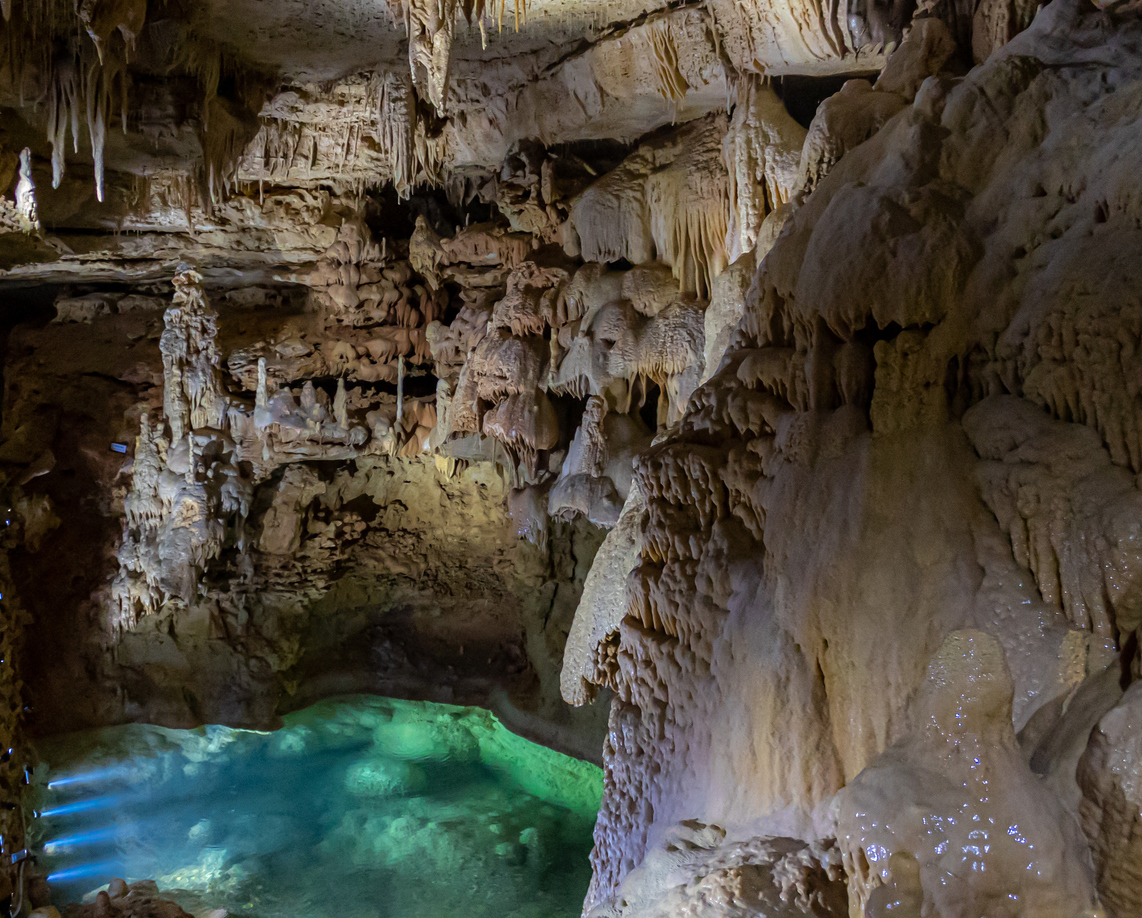
Natural Bridge Caverns, located northeast of San Antonio, is the largest commercial cave system in Texas and one of the most visited in the state. It was discovered on March 27, 1960, by a group of students from St. Mary’s University, who explored a small opening on private land with permission from the owner. The caverns opened to the public in 1964 and have since become a major attraction, featuring guided tours through massive underground chambers. The name comes from a 60-foot natural limestone bridge located at the entrance. Inside, temperatures remain around 70°F year-round, making it a comfortable destination regardless of the season.
Mission San José’s Rose Window and Its Enduring Story
View this post on Instagram
Mission San José y San Miguel de Aguayo, often called the “Queen of the Missions,” is known for its detailed stonework and architectural features. One of its most famous elements is the Rose Window, carved in the 18th century and considered one of the finest examples of Spanish colonial stonework in the United States. While a popular legend connects the window to a tragic love story, historical records primarily attribute its craftsmanship to skilled artisans of the period rather than a single documented narrative. Today, the window remains a highlight for visitors exploring the mission and its restored grounds.