Outdoor Wonders and Oddities Across the Texas Landscape
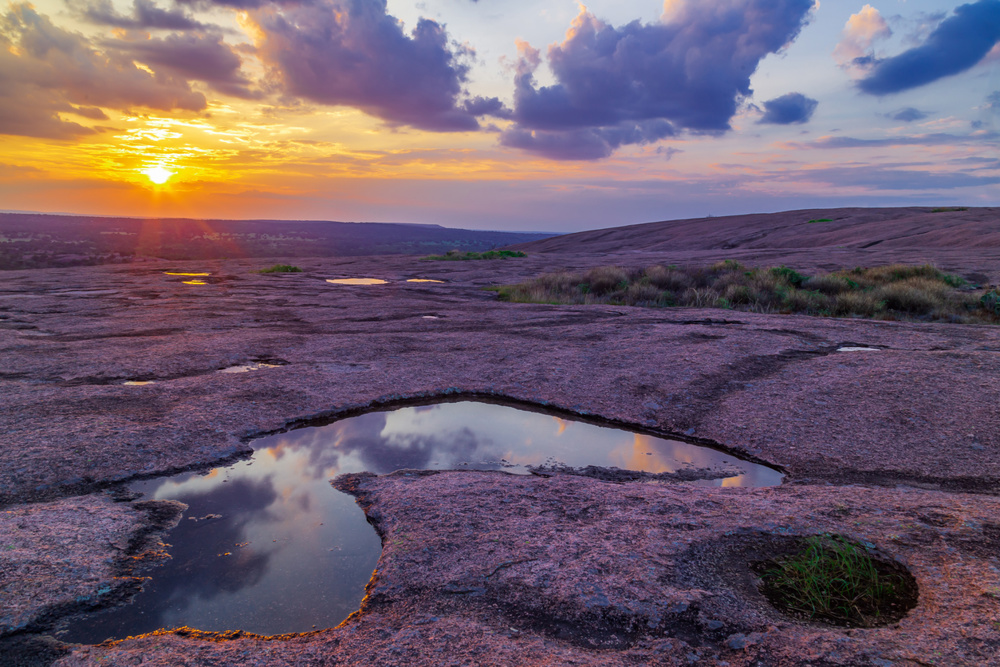
You'll discover Texas holds remarkable natural diversity, from the massive pink granite dome at Enchanted Rock rising 425 feet above the Hill Country to the dramatic depths of Palo Duro Canyon and the spring-fed waters of Balmorhea State Park.
Across the state’s 268,000+ square miles, you’ll find rare crystal formations in the Caverns of Sonora, ancient cypress forests at Caddo Lake, and preserved dinosaur tracks at Dinosaur Valley State Park. These destinations span multiple regions, each offering unique geological formations and outdoor experiences worth exploring.
Palo Duro and Santa Elena: Texas's Largest Canyons
Texas features two of its most striking canyon landscapes in Palo Duro Canyon and Santa Elena Canyon in Big Bend.
Palo Duro Canyon stretches approximately 120 miles long, making it the second-largest canyon system in the United States. Depths reach up to 800–1,000 feet, revealing colorful layers of Permian and Triassic rock. The iconic Lighthouse Rock formation rises prominently from the canyon floor, shaped by erosion from the Prairie Dog Town Fork of the Red River.
The canyon also holds deep historical significance, including its role in the Red River War of 1874. Today, the state park spans over 29,000 acres and offers hiking, camping, and equestrian trails, along with the long-running outdoor musical “Texas.”
In contrast, Santa Elena Canyon in Big Bend National Park features towering limestone walls rising up to 1,500 feet above the Rio Grande. While much smaller in length, it provides one of the most dramatic river canyon views in Texas.
Hamilton Pool and Krause Springs: Best Natural Swimming Holes
Hamilton Pool Preserve, located about 30 miles west of Austin, formed when an underground river collapsed thousands of years ago. The result is a jade-green pool beneath a limestone overhang with a seasonal waterfall.
Reservations are required, and swimming access depends on water quality and safety conditions, not just skill level. Entry fees are typically around $12 per vehicle.
Krause Springs, in nearby Spicewood, offers a more accessible experience. The privately owned property features 32 natural springs, a landscaped pool, and a natural swimming area surrounded by cypress trees and ferns. Water temperatures are typically cool but not fixed year-round at a specific degree. Admission is generally around $10 per person, with camping available onsite.
Enchanted Rock's Pink Granite Dome and Sal Del Rey Salt Flat
Enchanted Rock State Natural Area features one of the largest exposed granite domes in the United States. The formation rises 425 feet above the surrounding terrain and is part of a much larger underground granite mass estimated to be over a billion years old.
The dome produces cracking and popping sounds due to temperature changes, which contributed to legends among Indigenous groups including the Tonkawa and Apache.
The park offers around 11 miles of hiking trails, and due to its popularity, reservations are often required during peak seasons.
Further south, Sal Del Rey in the Lower Rio Grande Valley is a striking natural salt flat known for its bright white surface and historical use as a salt source. It provides a unique, lesser-known landscape compared to more visited Hill Country sites.
Big Bend and Guadalupe Mountains National Parks
Big Bend National Park, established in 1944, protects over 800,000 acres of Chihuahuan Desert terrain along the Rio Grande. It is one of the most biologically diverse desert regions in North America, with over 1,200 plant species and more than 450 bird species.
Elevations range from river-level desert to mountain peaks like Emory Peak (7,832 feet). The park offers over 150 miles of hiking trails and is internationally recognized for its dark sky designation, making it one of the best stargazing locations in the U.S.
Nearby, Guadalupe Mountains National Park includes Guadalupe Peak (8,751 feet), the highest point in Texas. The park features rugged desert landscapes, high-elevation forests, and scenic canyons such as McKittrick Canyon, known for its fall foliage.
Caddo Lake's Cypress Forest and Wetlands
Located on the Texas-Louisiana border, Caddo Lake spans roughly 25,000 acres and contains one of the largest cypress forests in the United States. Bald cypress trees rise from shallow bayous, creating a maze of waterways covered in Spanish moss.
The lake supports diverse wildlife, including over 200 bird species, reptiles, amphibians, and fish. It is designated as a Ramsar Wetland of International Importance, highlighting its ecological significance.
Paddling through its quiet channels offers a completely different experience from the open landscapes of West Texas.
Caverns of Sonora and Underground Wonders
The Caverns of Sonora, located along Interstate 10 in West Texas, are widely recognized for their dense concentration of active cave formations, including helictites and soda straw stalactites.
Other notable cave systems include:
- Natural Bridge Caverns (near San Antonio), one of the largest commercial caverns in Texas
- Inner Space Cavern (Georgetown), known for Ice Age fossils discovered during highway construction
These caves formed over millions of years through mineral-rich water deposits, creating intricate underground landscapes.
West Texas, Hill Country, and East Texas: Planning by Region
Texas’s size makes regional planning essential for outdoor travel.
West Texas:
Big Bend, Guadalupe Mountains, and Monahans Sandhills offer desert landscapes, mountain hikes, and remote stargazing opportunities.
Hill Country:
Enchanted Rock, Pedernales Falls, and Hamilton Pool provide accessible hiking, swimming, and scenic drives.
East Texas:
Caddo Lake and the Piney Woods region feature forests, wetlands, and wildlife-rich environments.
Each region offers a distinct experience, from arid deserts to lush wetlands, making Texas one of the most geographically diverse states for outdoor exploration.